
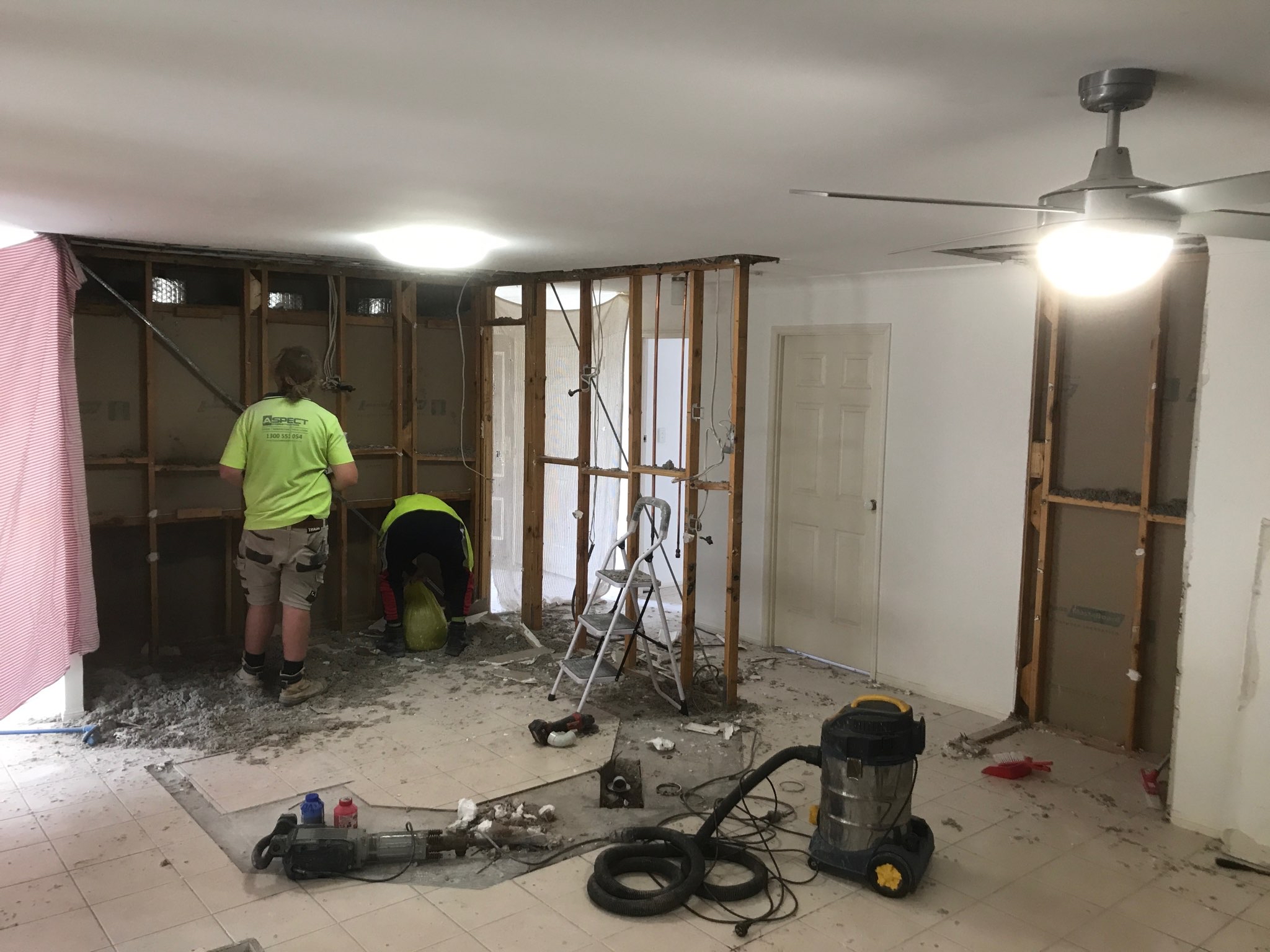
Demolition day is the most under-rated phase of an interior project — it’s where most of the surprises live, and where the last chance to improve the design quietly disappears. Here’s what I look for, and why.
Every renovation has two budgets — the one on the spreadsheet, and the one hiding behind the gyprock. Demolition is the moment they meet. Walking a site between strip-out and frame-up is, for my money, the most useful day of the whole job. Five things I always check:
Floor levels (the ones the drawings lied about)
An old timber floor often steps two or three times across a room. Catch it before the new joinery is set out. A 12mm rise across a 3m kitchen is invisible to the eye but disastrous for an island bench’s plumb.
Service routes
Existing waste, gas and electrical paths are gold. Re-use what you can; the carbon (and cost) of re-routing services is the most invisible line item in any renovation.
Light sources you didn’t know about
Strip-out reveals borrowed light from neighbouring rooms — glazing that used to feel claustrophobic suddenly makes sense. This is the day to decide whether to keep that high window, or close it up.
Material salvage
That cypress flooring, that solid-timber door, that 60s tile run — most of it goes in the skip on day one. A 20-minute chat with the demo crew can save half a tonne of embodied carbon and half a thousand dollars of new spec.
Trade sequencing
The shock of a fully stripped room makes it obvious which trades are sequenced wrong. Cabinet maker measuring before the screed is poured? Tiler scheduled before the plumber rough-in is signed off? Catch it now, save a day later.
Demolition isn’t an interruption to design. It’s the last design meeting. Be there.